Journal
Travelling Vietnam with Strangers: 12 Questions to Ask Before You Book
 Written by Harshit Malik5 min read
Booking a Vietnam trip with strangers? Ask these 12 practical questions about the group, costs, rooms, pace and support before you commit your money.
At a glance
- Written by
- Harshit Malik
- Published
- Reading time
- 5 min
- Trip
- View trips
The right questions turn an attractive itinerary into a trip you can actually assess. Use them to compare departures and get useful answers in writing.
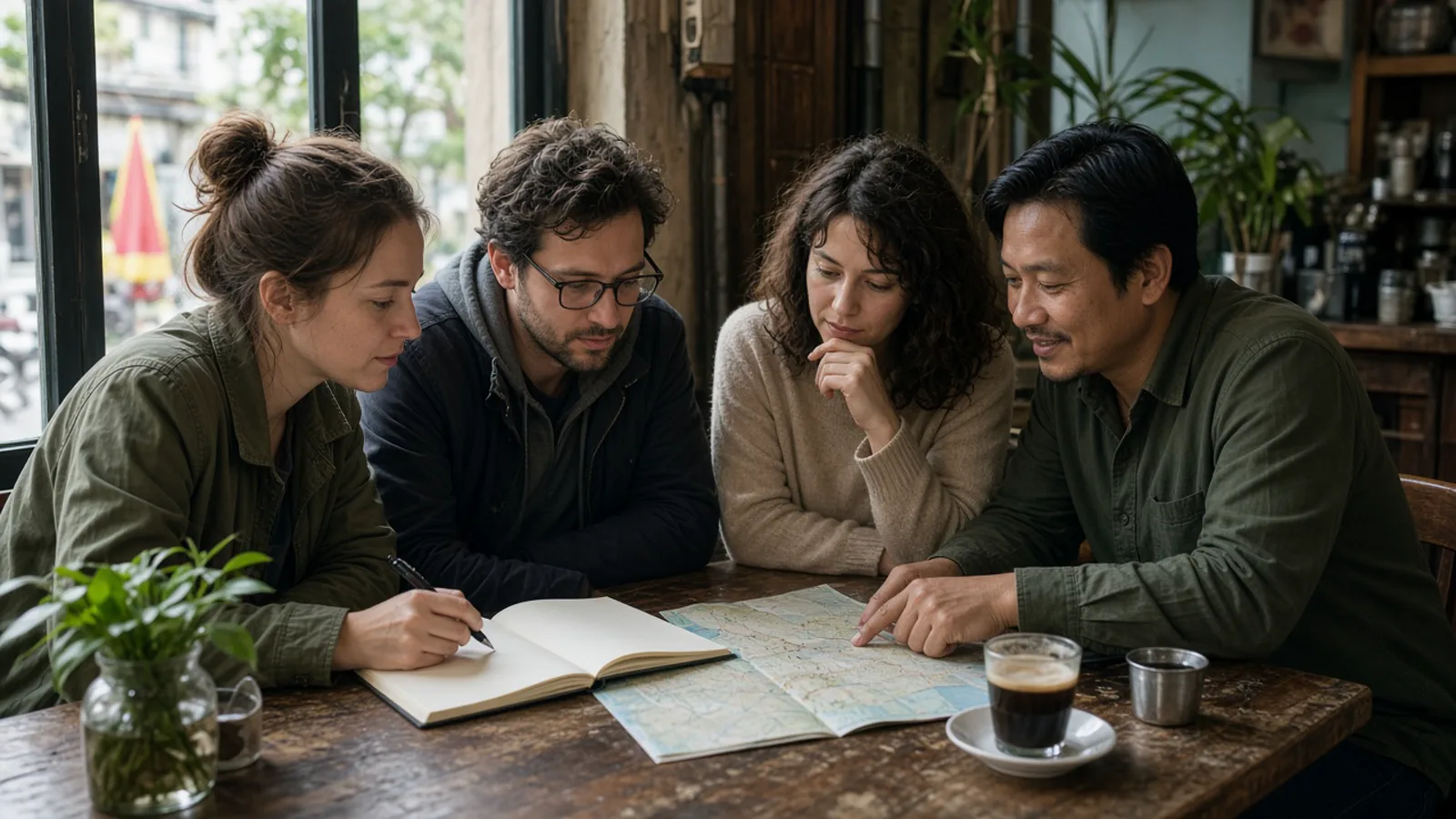
The photographs are doing their job. There is a boat, a crowded dinner table and a group that appears to have become inseparable somewhere between breakfast and sunset. You want the experience. Before paying, give yourself a less photogenic advantage: a clear understanding of what the organiser will provide and what you will need to arrange.
These twelve questions cover the decisions most likely to affect your everyday holiday. Ask them about the exact Vietnam departure you are considering. Save the answers alongside the itinerary and booking conditions so you can compare the complete offer.

The people and the person in charge
1. Who is the trip intended for, and what is the group size?
Ask about the age policy, minimum and maximum group size, and whether the departure is confirmed. If available, an anonymous overview of solo bookings, couples and friends can help. Treat current numbers as provisional. You are checking whether the format appeals to you, rather than expecting the organiser to guarantee friendship or reveal other travellers' personal information.
2. Who leads the trip, and what does that role include?
Ask who handles logistics, who provides destination interpretation and whether local activity guides join separately. WeRoad, for example, describes its group leader as managing arrangements such as transport, timings and accommodation.[1] Clarify the service you are buying: the title leader, coordinator or guide is less informative than a direct explanation of responsibilities and availability.
3. How are inappropriate behaviour and room conflicts handled?
Request the conduct policy and a private reporting route, including a contact outside the immediate group. Ask what practical options exist if a sharing arrangement becomes difficult. You do not need to predict every disagreement. You do need to know that a concern can reach someone able to respond, rather than becoming a discussion for the entire group chat.
The days you will actually live
4. What will I share each night?
Request a breakdown of hotel rooms, bathrooms, boat cabins and train compartments. INTRO's Vietnam Intro 12-day page, for example, lists a quad-share overnight train.[2] Ask about beds, gender arrangements and possible sharing outside the tour. If buying a private-room supplement, have the organiser identify any nights or accommodation types it does not cover.
5. How much of the itinerary is spent moving?
Ask for approximate journey lengths, departure times and the number of accommodation changes. Read a travel day from waking up to reaching the next room. Does the description allow time to eat and rest? If you have limited annual leave, assess whether you prefer more destinations or more time in each place. Both choices involve a trade-off.
6. Can I decline activities and still enjoy the day?
Clarify which activities are required for the group to move together and which allow an alternative. Ask what happens if you skip a bike ride, boat activity or evening out, including transport and extra costs. Free choice is easier to evaluate when the organiser explains where you will be and how you rejoin the group afterwards.
The complete price and the booking terms
7. What is the likely total beyond the advertised price?
Request a written breakdown of included meals, transfers, entrance fees and transport, then ask about compulsory local payments, tips and optional activities. Add your international flights, insurance and pre-trip costs separately. Confirm the payment currency and any known transaction charges. A price displayed for browsing should not become your budget until you understand what is actually charged.
8. Who supplies optional activities?
Ask whether an extra excursion forms part of the tour contract or is purchased from another provider. Intrepid's standard terms state that optional activities outside the trip price have a separate provider contract.[3] Knowing who operates an activity helps you ask the right organisation about its inclusions, requirements, cancellation arrangements and assistance if something goes wrong.
9. What happens if either side cancels?
Read the rules for your cancellation, the organiser's cancellation and major disruption separately. Ask whether each outcome means cash, credit or another departure, and whether time limits apply. Intrepid's standard terms distinguish traveller cancellation, operator cancellation and force-majeure events.[3] Confirm which terms and any special conditions govern your booking; separately booked flights also need their own assessment.
Arrival, disruption and practical help
10. Where does the service start, and what must I arrange?
Confirm the first meeting point, the latest sensible arrival and the final drop-off. Ask who handles airport transfers, extra nights and entry documents. Check entry rules for the passport you will use. Vietnam's Immigration Department identifies the official e-visa portals in its public notice.[4] Keep document responsibilities clear even if the organiser offers application guidance.
11. What changes if weather interrupts the route?
Ask about alternatives, decision-making and responsibility for added costs. Australia's advisory warns that severe weather can disrupt Vietnam transport and services.[5] A useful answer explains how the organiser communicates changes and responds when an activity cannot run. Consider that answer when arranging a separately booked flight immediately after the tour; leave a margin that suits the connection.
12. Who helps if I become unwell or need to leave early?
Ask how assistance works during organised activities and free time, including contacting your insurer and arranging onward travel. Find out who can be reached outside normal hours. Share essential personal requirements before paying and request a clear response. An operator can explain its support; your insurance policy must separately be checked for the costs and circumstances it covers.
Look for answers you can act on
| Topic | Useful detail to receive |
|---|---|
| Arrival | Meeting point, identity checks and delayed-flight contact. |
| Rooms | Nightly sharing arrangements and confirmed upgrade exceptions. |
| Disruption | Decision contact, alternatives and who pays extra costs. |
You need enough detail to decide whether the trip fits your budget, comfort and expectations. If a reply is vague, ask one concrete follow-up. When the answers make sense, the attractive part of travelling Vietnam with strangers becomes easier to enjoy: you can look forward to the people and experiences with a clearer understanding of the plan.
FAQ
1. Who is the trip intended for, and what is the group size?
Ask about the age policy, minimum and maximum group size, and whether the departure is confirmed. If available, an anonymous overview of solo bookings, couples and friends can help. Treat current numbers as provisional. You are checking whether the format appeals to you, rather than expecting the organiser to guarantee friendship or reveal other travellers' personal information.
2. Who leads the trip, and what does that role include?
Ask who handles logistics, who provides destination interpretation and whether local activity guides join separately. WeRoad, for example, describes its group leader as managing arrangements such as transport, timings and accommodation.[1] Clarify the service you are buying: the title leader, coordinator or guide is less informative than a direct explanation of responsibilities and availability.
3. How are inappropriate behaviour and room conflicts handled?
Request the conduct policy and a private reporting route, including a contact outside the immediate group. Ask what practical options exist if a sharing arrangement becomes difficult. You do not need to predict every disagreement. You do need to know that a concern can reach someone able to respond, rather than becoming a discussion for the entire group chat.
4. What will I share each night?
Request a breakdown of hotel rooms, bathrooms, boat cabins and train compartments. INTRO's Vietnam Intro 12-day page, for example, lists a quad-share overnight train.[2] Ask about beds, gender arrangements and possible sharing outside the tour. If buying a private-room supplement, have the organiser identify any nights or accommodation types it does not cover.
5. How much of the itinerary is spent moving?
Ask for approximate journey lengths, departure times and the number of accommodation changes. Read a travel day from waking up to reaching the next room. Does the description allow time to eat and rest? If you have limited annual leave, assess whether you prefer more destinations or more time in each place. Both choices involve a trade-off.
6. Can I decline activities and still enjoy the day?
Clarify which activities are required for the group to move together and which allow an alternative. Ask what happens if you skip a bike ride, boat activity or evening out, including transport and extra costs. Free choice is easier to evaluate when the organiser explains where you will be and how you rejoin the group afterwards.
7. What is the likely total beyond the advertised price?
Request a written breakdown of included meals, transfers, entrance fees and transport, then ask about compulsory local payments, tips and optional activities. Add your international flights, insurance and pre-trip costs separately. Confirm the payment currency and any known transaction charges. A price displayed for browsing should not become your budget until you understand what is actually charged.
8. Who supplies optional activities?
Ask whether an extra excursion forms part of the tour contract or is purchased from another provider. Intrepid's standard terms state that optional activities outside the trip price have a separate provider contract.[3] Knowing who operates an activity helps you ask the right organisation about its inclusions, requirements, cancellation arrangements and assistance if something goes wrong.
9. What happens if either side cancels?
Read the rules for your cancellation, the organiser's cancellation and major disruption separately. Ask whether each outcome means cash, credit or another departure, and whether time limits apply. Intrepid's standard terms distinguish traveller cancellation, operator cancellation and force-majeure events.[3] Confirm which terms and any special conditions govern your booking; separately booked flights also need their own assessment.
10. Where does the service start, and what must I arrange?
Confirm the first meeting point, the latest sensible arrival and the final drop-off. Ask who handles airport transfers, extra nights and entry documents. Check entry rules for the passport you will use. Vietnam's Immigration Department identifies the official e-visa portals in its public notice.[4] Keep document responsibilities clear even if the organiser offers application guidance.
11. What changes if weather interrupts the route?
Ask about alternatives, decision-making and responsibility for added costs. Australia's advisory warns that severe weather can disrupt Vietnam transport and services.[5] A useful answer explains how the organiser communicates changes and responds when an activity cannot run. Consider that answer when arranging a separately booked flight immediately after the tour; leave a margin that suits the connection.
12. Who helps if I become unwell or need to leave early?
Ask how assistance works during organised activities and free time, including contacting your insurer and arranging onward travel. Find out who can be reached outside normal hours. Share essential personal requirements before paying and request a clear response. An operator can explain its support; your insurance policy must separately be checked for the costs and circumstances it covers.
Sources
- [1] WeRoad. FAQ - Frequently Asked Questions. Accessed 6 October 2026.
- [2] INTRO Travel. Vietnam Intro | 12 day group tour. Accessed 6 October 2026.
- [3] Intrepid Travel. Standard Booking Conditions. Accessed 6 October 2026.
- [4] Vietnam Immigration Department. Vietnam evisa - National portal on Immigration. Accessed 6 October 2026.
- [5] Australian Government, Smartraveller. Vietnam Travel Advice & Safety. Accessed 6 October 2026.